Tag: education

  • Syair, An Introduction to Indonesian Poetry

    Poetry is a form of literary expression that has been prevalent in different cultures and languages for centuries.

    Indonesian poetry, in particular, is known for its unique form and structure. One of the most significant forms of poetry in Indonesian literature is Syair.

    Origin and History of Syair

    Syair is a form of poetry that originated in the Arab world and was introduced to Indonesia by Islamic scholars.

    It was initially written in Arabic and later translated into Malay. Syair was primarily used as a medium to spread Islamic teachings and values among the people.

    During the Dutch colonial era, Syair became a popular form of literature in Indonesia. The poets used it to express their views on the political and social issues of the time.

    The popularity of Syair continued to grow during the Indonesian National Revolution when it was used to inspire the people to fight for their freedom.

    The Form and Structure of Syair

    Syair is a type of poetry that follows a specific structure. It usually consists of quatrains, with each quatrain containing four lines.

    The rhyme scheme is AABB or ABAB. Each line has eight syllables, making Syair easy to recite and remember.

    The Role of Syair in Indonesian Literature

    Syair has played a significant role in the development of Indonesian literature. It has been used as a medium to spread religious teachings and values, as well as a tool for political and social commentary. Syair has also been used to express personal feelings and emotions.

    Examples of Famous Syair

    Some of the most famous Syair in Indonesian literature include Hikayat Abu Nawas, Hikayat Amir Hamzah, and Syair Abdul Muluk.

    The Popularity of Syair in Modern Times

    Despite the emergence of new forms of poetry and literature, Syair continues to be popular in Indonesia. Many poets still write in this form, and it is also taught in schools.

    The Influence of Syair on Indonesian Culture

    Syair has had a significant impact on Indonesian culture. It has been used to inspire the people to fight for their freedom, spread religious teachings, and express personal feelings and emotions.

    The Challenges Faced by Syair

    One of the significant challenges faced by Syair is the declining interest in traditional forms of literature. With the emergence of new forms of poetry and literature, Syair has struggled to maintain its popularity.

    The Future of Syair

    Despite the challenges, Syair is still relevant today, and many people believe that it will continue to play a significant role in Indonesian literature.

    With the rise of social media, more people are now exposed to traditional forms of literature, and Syair has the potential to reach a broader audience.

    Importance of Preserving Syair

    It is essential to preserve Syair as it is a vital part of Indonesian literature and culture. It is also a valuable tool for understanding the history, beliefs, and values of the Indonesian people.
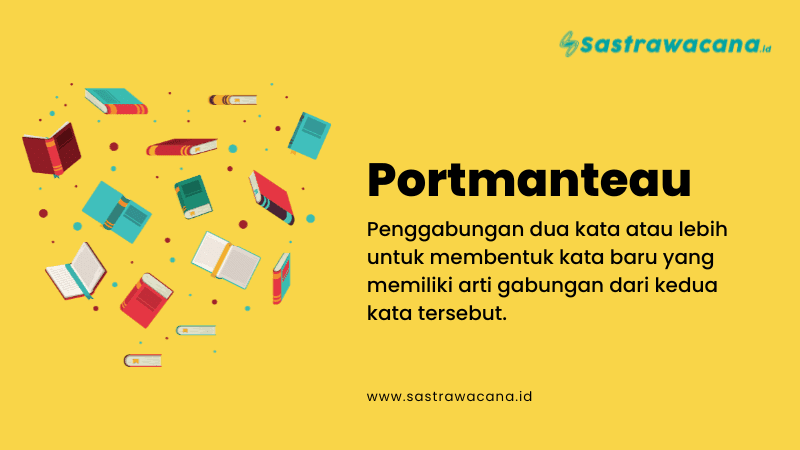

  • Portmanteau Meaning, Definition, and Example

    Portmanteau is a term used to describe the combining of two or more words to form a new word that has the combined meaning of both words.

    The term portmanteau was first introduced by British writer Lewis Carroll in his novel Through the Looking Glass, published in 1871.

    In his book, Lewis Carroll explains the origin of the word slithy, which is a combination of slimy and lithe, then the word mimsy which is a combination of miserable and flimsy.

    Since then, the use of portmanteau has become popular and used by many people in everyday life.

    One of them is a well-known company, Intel. It turns out that the name is a combination of (integrated and electronics).

    In fact, there are also country names that use portmanteau, namely Tanzania (Tanganyika and Zanzibar).

    In addition, there are many other examples of portmanteau, including:

    • Brunch, which is a combination of breakfast and lunch.
    • Spork, which is a combination of spoon and fork.
    • Smog, which is a combination of smoke and fog.
    • Chocoholic, which is a combination of chocolate and alcoholic.
    • Infomercial, which is a combination of information and commercial.
    • Cyborg, which is a combination of cybernetic and organism.
    • Blog, which is a combination of web and log.
    • Vlog, which is a combination of video and blog.
    • Cosplay, which is a combination of costume and play.
    • Netizen, which is a combination of internet and citizen.
    • Forex, which is a combination of foreign and exchange.
    • Emoticon, which is a combination of emotion and icon.
    • Bollywood, which is a combination of bombay and hollywood.
    • Malware, which is a combination of malicious and software.
    • Webinar, which is a combination of World Wide Web and seminar.
    • Telemarketing, which is a combination of telephone and marketing.
  • Portmanteau Adalah? Ini Pengertian, Sejarah, dan Contohnya

    Portmanteau Adalah? Ini Pengertian, Sejarah, dan Contohnya

    Portmanteau adalah istilah yang digunakan untuk menggambarkan penggabungan dua kata atau lebih untuk membentuk kata baru yang memiliki arti gabungan dari kedua kata tersebut.

    Dalam bahasan Indonesia, portmanteau disebut sebagai lakuran.

    Menurut KBBI, lakuran adalah kata baru yang terbentuk dari hasil penggabungan dua kata atau lebih kata sehingga menghasilkan arti gabungan dari kata-kata pembentuknya.

    Istilah portmanteau pertama kali diperkenalkan oleh penulis Inggris, Lewis Carroll, dalam novelnya yang berjudul “Through the Looking Glass” yang diterbitkan pada tahun 1871.

    Dalam bukunya tersebut, Lewis Carroll menjelaskan asal muasal kata slithy, yaitu gabungan dari slimy (berlendir) dan lithe (langsing), kemudian kata mimsy yang merupakan gabungan dari miserable (menyedihkan) dan flimsy (lemah).

    Sejak saat itu, penggunaan portmanteau menjadi populer dan digunakan oleh banyak kalangan dalam kehidupan sehari-hari.

    Salah satunya adalah perusahaan ternama, yaitu Intel. Ternyata nama tersebut adalah gabungan dari (integrated dan electronics).

    Bahkan, ada juga nama negara yang menggunakan portmanteau, yaitu Tanzania (Tanganyika dan Zanzibar).

    Selain itu, masih banyak contoh portmanteau lainnya, antara lain:

    • Brunch, yang merupakan gabungan dari breakfast dan lunch.
    • Spork, yang merupakan gabungan dari spoon dan fork.
    • Smog, yang merupakan gabungan dari smoke dan fog.
    • Chocoholic, yang merupakan gabungan dari chocolate dan alcoholic.
    • Infomercial, yang merupakan gabungan dari information dan commercial.
    • Cyborg, yang merupakan gabungan dari cybernetic dan organism.
    • Blog, yang merupakan gabungan dari web dan log.
    • Vlog, yang merupakan gabungan dari video dan blog.
    • Cosplay, yang meruakan gabungan dari costume dan play.
    • Netizen, yang merupakan gabungan dari internet dan citizen.
    • Forex, yang merupakan gabungan dari foreign dan exchange.
    • Emoticon, yang merupakan gabungan dari emotion dan icon.
    • Bollywood, yang merupakan gabungan dari bombay dan hollywood.
    • Malware, yang merupakan gabungan dari malicious dan software.
    • Webinar, yang merupakan gabungan dari World Wide Web dan seminar.
    • Telemarketing, yang merupakan gabungan dari telephone dan marketing.
  • What Does Anecdote Mean? Here’ss Definition and Example

    What is Anecdote?

    Anecdote is a short and often amusing or interesting story about a real incident or person.

    It is usually based on personal experiences or observations, and it is told to illustrate a point, convey a message, or provoke a reaction.

    Anecdotes can be found in various forms of media, such as books, articles, speeches, podcasts, videos, and social media posts.

    Anecdotes are a type of storytelling that can entertain, educate, persuade, and emotionally connect with an audience.

    Anecdotes can be found in various forms of media, including literature, movies, speeches, and even in daily conversations.

    The purpose of an anecdote is to provide a real-life example of a concept, making it more relatable and easier to understand.

    What is the Difference Between Anecdote and Story?

    While anecdotes and stories are similar, they have a few differences. An anecdote is a short and amusing or interesting story about a real incident or person.

    It is usually used to illustrate a point or provide insight into a situation. In contrast, a story is a longer and more detailed narrative that may or may not be based on real events.

    Another difference between anecdotes and stories is their purpose. Anecdotes are usually used to make a point or provide insight into a situation, while stories can be used to entertain, educate, or inspire.

    Both anecdotes and stories can be effective in conveying a message, but they are best used in different contexts.

    Anecdotes are best used in situations where a short and simple story can help to make a point or provide insight into a situation.

    Stories, on the other hand, are better suited to situations where a more detailed narrative is required to entertain, educate, or inspire.

    Example of Anecdotes

    Anecdotes can be found in various places, and they can be about anything from a personal experience to a historical event. Here are some examples of anecdotes that you might come across:

    1. I owned a border collie once. She was really wise. As I opened the front door in the morning, she would rush out, grab the newspaper, and hand it to my husband at the breakfast table.

    2. That a white rose, is it? Wow! I cherish them. More than 200 different species of roses were in my grandfather’s extensive rose garden. He would go into the garden every Friday, cut a dozen, and create my grandmother a bouquet. Does such love still exist today?

    3. Every year when I was a child, my family visited the Great Smoky Mountains for a summer vacation. My aunt once observed a black bear while trekking. She spent an hour sitting on a boulder because she was so afraid that she wanted to make sure it had moved far enough away from her. She still won’t hike anywhere by herself.

    4. I went to a movie one night with my roommate and some other residents of our dorm. I arrived at the theater by automobile. Imagine our shock when we entered the car to discover ham slices all over the windshield. I’ve never figured out who or why placed ham on my automobile.

    5. Cody, my dog, adored the water. When we went to see my mother, he would swim all day since he loved to do it. She required him to leave the pool area one day. She placed him in the garage but left the windows open because he was drenched. To reach the pool, he jumped five feet above and through a screen.

  • What Does Anecdote Mean? Here’s Definition and Example

    What Does Anecdote Mean? Here’s Definition and Example

    What is Anecdote?

    Anecdote is a short and often amusing or interesting story about a real incident or person.

    It is usually based on personal experiences or observations, and it is told to illustrate a point, convey a message, or provoke a reaction.

    Anecdotes can be found in various forms of media, such as books, articles, speeches, podcasts, videos, and social media posts.

    Anecdotes are a type of storytelling that can entertain, educate, persuade, and emotionally connect with an audience.

    Anecdotes can be found in various forms of media, including literature, movies, speeches, and even in daily conversations.

    The purpose of an anecdote is to provide a real-life example of a concept, making it more relatable and easier to understand.

    What is the Difference Between Anecdote and Story?

    While anecdotes and stories are similar, they have a few differences. An anecdote is a short and amusing or interesting story about a real incident or person.

    It is usually used to illustrate a point or provide insight into a situation. In contrast, a story is a longer and more detailed narrative that may or may not be based on real events.

    Another difference between anecdotes and stories is their purpose. Anecdotes are usually used to make a point or provide insight into a situation, while stories can be used to entertain, educate, or inspire.

    Both anecdotes and stories can be effective in conveying a message, but they are best used in different contexts.

    Anecdotes are best used in situations where a short and simple story can help to make a point or provide insight into a situation.

    Stories, on the other hand, are better suited to situations where a more detailed narrative is required to entertain, educate, or inspire.

    Example of Anecdotes

    Anecdotes can be found in various places, and they can be about anything from a personal experience to a historical event. Here are some examples of anecdotes that you might come across:

    1. I owned a border collie once. She was really wise. As I opened the front door in the morning, she would rush out, grab the newspaper, and hand it to my husband at the breakfast table.

    2. That a white rose, is it? Wow! I cherish them. More than 200 different species of roses were in my grandfather’s extensive rose garden. He would go into the garden every Friday, cut a dozen, and create my grandmother a bouquet. Does such love still exist today?

    3. Every year when I was a child, my family visited the Great Smoky Mountains for a summer vacation. My aunt once observed a black bear while trekking. She spent an hour sitting on a boulder because she was so afraid that she wanted to make sure it had moved far enough away from her. She still won’t hike anywhere by herself.

    4. I went to a movie one night with my roommate and some other residents of our dorm. I arrived at the theater by automobile. Imagine our shock when we entered the car to discover ham slices all over the windshield. I’ve never figured out who or why placed ham on my automobile.

    5. Cody, my dog, adored the water. When we went to see my mother, he would swim all day since he loved to do it. She required him to leave the pool area one day. She placed him in the garage but left the windows open because he was drenched. To reach the pool, he jumped five feet above and through a screen.

  • What Is Organic Matter? Explained in Simple Terms

    What Is Organic Matter? Explained in Simple Terms

    Organic matter is a vital component of soil health and plays a crucial role in sustaining plant and animal life.

    It refers to the remains of plants, animals, and other living organisms that have decayed and decomposed over time.

    Organic matter is rich in nutrients, minerals, and beneficial microorganisms, making it an essential element for healthy soil and agriculture.

    What Is Organic Matter?

    Organic matter consists of living and dead organisms and their by-products, such as leaves, stems, roots, and animal waste.

    It also includes decomposing organisms such as fungi, bacteria, and other microorganisms that break down organic matter and convert it into nutrients.

    Organic matter is critical for soil health as it improves soil structure, water-holding capacity, and nutrient availability.

    It also provides a habitat for beneficial microorganisms that help to suppress harmful pathogens, improve soil aeration and drainage, and enhance nutrient cycling.

    Why Is Organic Matter Important for Soil Health?

    Organic matter plays a crucial role in maintaining soil health and fertility. Here are some of the benefits of organic matter for soil health:

    1. Improves Soil Structure – Organic matter helps to improve soil structure by providing a binding agent that helps to hold soil particles together.

    This enhances soil porosity and allows water, air, and nutrients to penetrate the soil easily.

    2. Enhances Water-holding Capacity – Organic matter helps to retain moisture in the soil, reducing the need for frequent watering. This is especially important in dry or arid regions where water is scarce.

    3. Increases Nutrient Availability – Organic matter is rich in nutrients such as nitrogen, phosphorus, and potassium, which are essential for plant growth.

    As organic matter decomposes, it releases these nutrients into the soil, making them available for plants to absorb.

    4. Promotes Beneficial Microorganisms – Organic matter provides a habitat for beneficial microorganisms such as bacteria, fungi, and earthworms.

    These organisms help to improve soil aeration and drainage, suppress harmful pathogens, and enhance nutrient cycling.

    How to Improve Organic Matter Content in Soil

    Improving organic matter content in soil is essential for maintaining soil health and fertility. Here are some ways to increase the organic matter content in your soil:

    1. Add Organic Amendments – Adding organic amendments such as compost, manure, and leaf litter to your soil can significantly improve organic matter content.

    These amendments also provide essential nutrients and microorganisms that help to improve soil health.

    2. Reduce Soil Disturbance – Reducing soil disturbance can help to preserve organic matter in the soil. Avoid tilling or plowing excessively, which can disturb the soil structure and reduce organic matter content.

    3. Plant Cover Crops – Planting cover crops such as legumes and grasses can help to increase organic matter content in the soil.

    These crops add organic matter to the soil when they die and decompose, enriching the soil with nutrients.

    4. Use Mulch – Mulching your soil with organic materials such as straw, leaves, or wood chips can help to retain moisture in the soil and improve soil structure. As the mulch decomposes, it also adds organic matter to the soil.

    In conclusion, organic matter is an essential component of soil health and plays a crucial role in sustaining plant and animal life.

    Improving organic matter content in your soil can significantly enhance soil health, increase crop yields, and reduce the need for chemical fertilizers and pesticides.

    So, make sure to take steps to improve your soil’s organic matter content and enjoy the benefits of healthy soil.

  • What Is a Main Circuit Breaker and How Does it Function?

    What Is a Main Circuit Breaker and How Does it Function?

    A main circuit breaker is an essential component in your home’s electrical system.

    It is an automatic switch that is connected to the electrical panel and responsible for interrupting the electrical power when a short circuit or overload occurs.

    What Does a Main Circuit Breaker Do?

    The main circuit breaker (MCB)protects your home from fires caused by too much electrical current flowing through the electrical wiring.

    If the current exceeds the capacity of the wiring, the wiring can become hot and potentially cause a fire.

    The main circuit breaker also protects your electrical appliances from damage caused by excessive current.

    When a short circuit or other electrical disturbance occurs, the main circuit breaker will interrupt the electrical current, preventing damage to your electrical appliances.

    How Does a Main Circuit Breaker Work?

    The main circuit breaker works on the principle of electromagnetic force.

    When the electrical current flowing through the wiring is too high, the magnet in the main circuit breaker becomes active and interrupts the electrical current.

    Once the main circuit breaker has interrupted the electrical current, you will need to reset the main circuit breaker switch to restore power.

    If the main circuit breaker continues to trip, there may be a problem with your home’s electrical system, and you should contact an electrician to inspect and repair it.

    Conclusion

    The main circuit breaker is a critical component in your home’s electrical system. Its function is to protect your home and electrical appliances from fires and damage caused by excessive current.

    The main circuit breaker works on the principle of electromagnetic force and interrupts the electrical current when a short circuit or overload occurs.

    Make sure your main circuit breaker is in good condition and functioning properly. If you have any questions or issues with your main circuit breaker, be sure to contact an electrician to inspect and repair it.

  • Exploring the Art of Talibun: A Unique Form of Indonesian Poetry

    Indonesia is a land of diverse cultures, traditions, and languages, each with its unique flavor and charm.

    One of the most intriguing forms of Indonesian poetry is Talibun, a blend of two words, “Talik” and “Bunyi,” which means melody or rhythm.

    Talibun is a form of traditional poetry that combines elements of Arabic, Malay, and Javanese poetry and is often used to express love, devotion, and wisdom.

    This article explores the world of Talibun, its structure, history, and relevance in modern times.

    What is Talibun?

    Talibun is a unique form of Indonesian poetry that originated in Java and has evolved over time. It combines elements of pantun, syair, and gurindam, which are other forms of traditional poetry.

    Talibun consists of four lines, with the first two lines in Arabic and the last two in Indonesian or Malay. The lines alternate between 8 and 12 syllables, and each line has a distinct rhythm and rhyme scheme.

    Talibun often conveys a message or moral lesson, and its beauty lies in its melody and meaningful content.

    Structure of Talibun:

    Talibun follows a strict structure that includes the following elements:

    1. The first line consists of two Arabic words that rhyme with each other and convey a specific meaning.

    2. The second line also has two Arabic words that rhyme with each other and relate to the first line’s meaning.

    3. The third line contains two Indonesian or Malay words that rhyme with each other and express a complementary message to the first two lines.

    4. The fourth line has two Indonesian or Malay words that rhyme with each other and conclude the poem with a moral or philosophical message.

    Example of Talibun:

    Here is an example of a Talibun to help you understand its structure and meaning:

    Kau hadir, ku hadir,

    Bersama di dalam cinta,

    Terluka, luka hilang,

    Seirama kebahagiaan.

    Translation:

    You are present, and I am present,

    Together in love,

    Pain is lost when we are hurt,

    In harmony with happiness.

    The History of Talibun:

    Talibun has its roots in Arabic poetry, which spread to Southeast Asia during the Islamic Golden Age.

    Indonesian poets adopted the form and infused it with their cultural and linguistic elements, creating a distinct form of poetry.

    Talibun became popular during the 19th century, and many famous poets, such as Ranggawarsita, wrote in this form.

    Talibun’s popularity waned during the 20th century due to the rise of modern poetry, but it has made a resurgence in recent years due to its unique style and meaningful content.

    The Relevance of Talibun in Modern Times:

    Talibun is still relevant in modern times, as it offers a glimpse into Indonesia’s rich cultural heritage and linguistic diversity.

    Talibun is often used in religious ceremonies, weddings, and other cultural events, where its melody and meaningful content can inspire and uplift people.

    Talibun has also gained a following on social media platforms, where young poets showcase their talent and creativity in this traditional form.

    Talibun’s relevance in modern times is a testament to its enduring beauty and significance.

  • Understanding Personification: Giving Life to Inanimate Objects

    Understanding Personification: Giving Life to Inanimate Objects

    As humans, we have a natural tendency to anthropomorphize inanimate objects, giving them human-like qualities such as emotions, actions, and personalities.

    This literary device, known as personification, has been used throughout history to add depth and meaning to written works, while also capturing the reader’s attention.

    Defining Personification

    Personification is a literary device that attributes human characteristics to non-human things, such as animals, objects, or concepts.

    It is a type of metaphor that gives these non-human entities the ability to perform human actions, feel emotions, and have personalities.

    By using personification, authors are able to add depth and meaning to their work, while also creating a more relatable and engaging narrative.

    Examples of Personification

    Personification has been used throughout literature, from ancient myths and fables to modern novels and poetry. Here are a few examples of personification in literature:

    “The wind whispered through the trees.” – In this example, the wind is given the ability to whisper, a human-like action.

    “The sun smiled down on us.” – The sun is given the ability to smile, another human-like action.

    “The car coughed and sputtered before finally starting.” – The car is given the ability to cough and sputter, as if it were a person with a cold.

    “The waves danced on the shore.” – The waves are given the ability to dance, a human-like action.

    Significance of Personification in Literature

    Personification is an essential literary device that is used to add depth and meaning to written works.

    By attributing human characteristics to non-human entities, authors are able to create a more relatable and engaging narrative, while also evoking emotions in the reader.

    Personification can be used to make abstract concepts more tangible and concrete, while also highlighting the interconnectedness of all things.

    In addition to its role in literature, personification is also used in advertising and branding to give products and companies personalities that consumers can relate to.

    By personifying their products, companies are able to create a more emotional connection with their customers, which can lead to increased sales and brand loyalty.

    Personification in Different Literary Genres

    Personification can be found in a wide variety of literary genres, including poetry, fiction, and non-fiction.

    In poetry, personification is often used to create vivid imagery and metaphor, while also exploring abstract concepts such as love, death, and nature.

    In fiction, personification can be used to create memorable characters and evoke emotions in the reader, while also highlighting the themes and motifs of the work.

    In non-fiction, personification can be used to make abstract concepts more concrete and relatable to the reader, while also making the work more engaging and interesting.

  • Habit Tracker: A Powerful Tool to Achieve Your Goals

    Habit Tracker: A Powerful Tool to Achieve Your Goals

    The Power of Habits

    Have you ever tried to break a bad habit or create a new, positive one, only to find yourself back where you started a few days or weeks later?

    Changing habits can be challenging, but it is essential if you want to achieve your goals and live a fulfilling life.

    Habits are the behaviors we repeat automatically, often without even thinking about them. Some habits, such as brushing your teeth or exercising regularly, are good for us.

    Others, such as smoking or procrastinating, can be harmful and hold us back from achieving our goals.

    Introducing Habit Tracker

    One tool that can help you develop better habits is a habit tracker.

    A habit tracker is a simple and effective way to monitor your progress as you work towards creating or breaking habits.

    It allows you to track your daily habits and see how they impact your overall progress.

    Habit tracker come in various forms, from pen-and-paper tracker to digital apps.

    The most effective habit tracker are those that are easy to use and allow you to customize your tracking based on your goals and lifestyle.

    How Habit Tracker Work

    Using a habit tracker is simple. Start by choosing the habits you want to track.

    These could be daily habits, such as drinking enough water or going for a walk, or larger goals, such as writing a book or learning a new language.

    Then, create a tracking system that works for you. Some people prefer to use a pen-and-paper tracker, while others prefer a digital app.

    Once you have your habit tracker set up, use it every day to track your progress. Make a note of whether or not you completed your habit for the day.

    Over time, you will start to see patterns and trends in your behavior, which can help you identify areas where you need to improve.

    The Benefits of Using a Habit Tracker

    There are several benefits to using a habit tracker. First, it helps you stay accountable to yourself.

    When you see your progress tracked over time, you are more likely to stick to your goals and make progress towards them.

    Second, habit tracker can help you identify patterns in your behavior.

    If you notice that you consistently struggle to complete a particular habit, you can adjust your approach and try a new strategy to help you succeed.

    Third, habit tracker can help you stay motivated. Seeing progress, no matter how small, can be incredibly motivating and help you stay focused on your goals.

    Tips for Using a Habit Tracker

    Here are a few tips to help you get the most out of your habit tracker:

    1. Keep it simple. Don’t track too many habits at once, or you may become overwhelmed and lose motivation.

    2. Be consistent. Use your habit tracker every day, even if you didn’t complete your habit. This will help you stay accountable and see your progress over time.

    3. Celebrate your successes. When you complete a habit, take a moment to celebrate your success. This will help reinforce the behavior and make it more likely that you will continue to complete the habit in the future.

    Conclusion

    Developing better habits is key to achieving your goals and living a fulfilling life. Habit tracker are a simple and effective way to monitor your progress as you work towards creating or breaking habits.

    By tracking your daily habits and seeing how they impact your overall progress, you can stay accountable to yourself, identify patterns in your behavior, and stay motivated to achieve your goals.

    With a little effort and consistency, you can use habit tracker to create the habits you need to succeed.