Tag: education

  • 7 Tips How to Promote a Book on Wattpad and Grow Your Readers

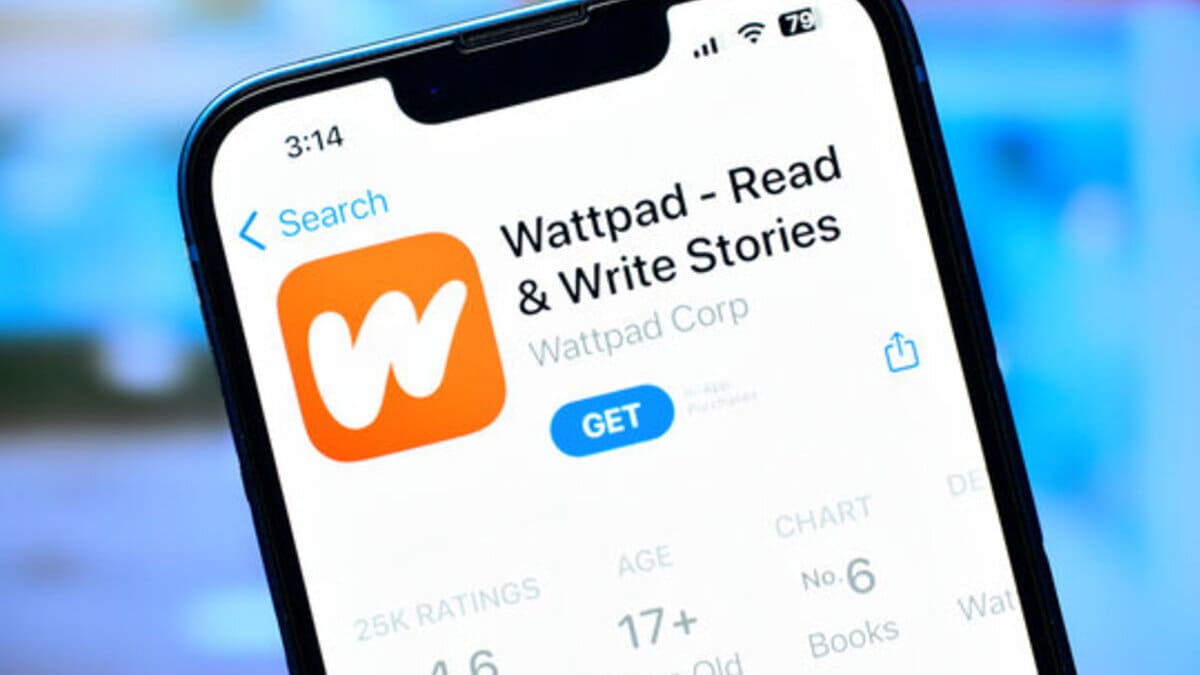
    7 Tips How to Promote a Book on Wattpad and Grow Your Readers

    Promoting a book on Wattpad is not just about shouting to the world that your story exists.

    It is about finding the people who will actually care, giving them a reason to click, and then keeping them hooked long enough to become part of your reader circle.

    Wattpad is a place where stories grow one chapter at a time, and the magic often happens in the small interactions between updates.

    If you can make readers feel welcome, curious, and excited for the next part, you will see your audience grow naturally.

    It is less about tricking an algorithm and more about building a space where your story feels alive.

    1. Make a promise your reader can feel before Chapter One

    Promotion starts before anyone reads a single line. Your title, cover, and blurb should work together like a tiny billboard that says who the story is for and why they should tap.

    Pick a title that signals genre and vibe clearly. If your book leans romance, let the trope shine in the title. If it is fantasy, hint at the core wonder or the threat your hero faces.

    Design the cover for a phone screen. One focal image, bold type, generous contrast, no clutter. Test it at thumbnail size by shrinking it on your device. If you cannot read it at a glance, simplify.

    Write a blurb that opens a loop rather than summarising the plot. Three to five short lines that introduce the main character, what they want, what blocks them, and the emotional risk if they fail. End on a tease that invites curiosity.

    Choose tags the way a reader would search. Start with a few broad tags for genre and age bracket, then add precise tags for tropes, setting, and tone.

    If your first commenters keep saying slow burn or found family, adjust your tags so new readers who love those things can find you faster.

    2. Serialise with rhythm so every update becomes an event

    Consistency is the quiet engine behind discovery on Wattpad. Pick a schedule you can keep and tell readers what it is.

    Treat each part like a mini episode with a beginning, a beat of change, and a reason to turn the page. End on micro cliffs.

    These can be a reveal, a decision that cannot be taken back, a secret overheard, or a perfectly loaded last line.

    Write with phone attention in mind. Many writers find that twelve hundred to eighteen hundred words per part keeps momentum without feeling thin. Name your parts with energetic, specific titles that read well in a library list.

    Use a short author note at the end, not the beginning. Thank readers, ask one concrete question, and invite votes and comments if they had fun.

    You are training a habit. Readers who know when you update and feel invited to react will return.

    3. Turn your comments into a living room rather than a notice board

    The comment section is not an announcement space, it is a conversation. Reply like a showrunner who enjoys theories, jokes, and emotional reactions.

    Pin a smart comment that captures the mood of the chapter. Ask the kind of question that invites a choice rather than a vague how did you like it.

    Celebrate fan art, playlists, and headcanons. When a reader spots a detail you planted, acknowledge it.

    If a scene confused several people, fix the scene and let them know you tightened it. You are building trust.

    Readers who feel seen will recommend your story without being asked.

    Set light boundaries to keep it welcoming. If your story touches sensitive topics, include content notes in the first author note and in your description so readers can choose with care.

    4. Use Wattpad’s native discovery without being spammy

    Discovery on Wattpad is partly search and partly social gravity. Keep your profile tidy so a new reader can understand you in ten seconds. Banner, short bio with a single line pitch, link to your other works, and your update day.

    Create one public reading list that includes your book and a few neighbours that share a mood or trope.

    Title the list for the reader, not the author. Think grumpy sunshine small town or rivals at the academy.

    Readers browse lists when they crave a feeling. Meet them there.

    Cross link your universe. If you have companion shorts, prequels, or side character scenes, add them to your story description and author notes at the right moments. Make it effortless to fall deeper into your world.

    5. Collaborate in ways that respect your readers’ taste

    Collabs work when there is genuine overlap. Look for writers whose audiences already love the flavour you serve.

    Offer a small exchange that puts the reader first, such as a one chapter cameo, a shared prompt where both of you write short scenes, or a tasteful end note shout that recommends one specific story with one reason a reader would enjoy it.

    Keep your ask simple and human. A message that says I loved how you handled the best friend dynamic in Chapter Twelve and I think my readers who enjoy found family would like your serial too will go further than a copy paste request.

    Do not overdo it. A rare, well placed recommendation feels like a gift. Weekly swaps feel like noise. Always disclose if it is a mutual shout so trust stays intact.

    6. Let off platform moments point back to one irresistible page

    Short video is your friend because emotion lands fast. Read a charged line from your latest chapter.

    Pair a few words of on screen text with a beat drop and a mood clip that fits your trope. Keep it simple enough to repeat every update week.

    Use a link in bio that opens straight to your current story rather than a crowded list of everything you have ever made.

    Pin a comment on your video with one clear hook such as She is hired to guard the boy who ruined her life.

    New chapter on Wattpad today. For your core readers, consider a tiny newsletter.

    It can be nothing more than update reminders, polls for covers or character names, and the occasional bonus scene. You own that audience and it keeps momentum when social algorithms get moody.

    7. Improve the reading path with small edits between updates

    Promotion is easier when the book itself pulls people forward. Watch the shape of your reads from part to part.

    If you notice a sharp drop after a specific chapter, the fix often lives in the chapter before it. Strengthen the last paragraph, raise the stakes one notch, or move a reveal up by a page.

    Then tell readers you sharpened that section so lapsed followers have a reason to return.

    Refresh the storefront when you learn what readers actually latch onto. If comments keep quoting a particular line, consider using that line in your description.

    If a side character steals the show, preview the next part from their point of view to harness that energy.

    Test small changes one at a time. Swap the cover and give it a week. Tighten the blurb and give it a week. Adjust tags based on the language readers use.

    This steady, low drama tinkering builds a cleaner on ramp for the next thousand people who discover you.

  • After studying the sixth session topic entitled monopoly and also readthe additional material

    After studying the sixth session topic entitled monopoly and also read the additional material, please give your own opinion regarding the following issue. PT. PLN is the company that provides electricity in Indonesia. It can be said that PT. PLN monopolizes the electricity industry. Why does PT PLN have the monopoly? Explain your reason.

    Answer:

    PT. PLN, or Perusahaan Listrik Negara, holds a monopoly in the electricity industry in Indonesia for several reasons.

    Firstly, PT. PLN was established as a state-owned enterprise tasked with providing electricity to the entire nation.

    This initial mandate gave PT. PLN the exclusive authority to generate, transmit, and distribute electricity across Indonesia.

    Secondly, establishing and maintaining an extensive electricity infrastructure requires significant investment and expertise, which PT. PLN has developed over decades.

    The scale of infrastructure needed, combined with regulatory barriers, makes it challenging for new competitors to enter the market.

    Additionally, ensuring nationwide electricity coverage involves complex coordination and planning, further consolidating PT. PLN’s position as the primary provider.

    While monopolies can sometimes lead to inefficiencies or lack of innovation, in the case of PT. PLN, its monopoly status has been crucial in achieving the overarching goal of providing reliable electricity access to all Indonesians, especially in remote areas where market forces alone might not suffice to ensure coverage.

    However, it’s essential for PT. PLN to operate transparently, efficiently, and be subject to appropriate regulatory oversight to mitigate the potential drawbacks of monopolistic control.

  • Why is the minimum energy needed for an effective collision?

    Why is the minimum energy needed for an effective collision?

    a. enough energy is needed to give off heat ina reaction.
    b. energy is needed to break bonds.
    c. a minimum energy is needed, so that theparticles will collide many times per second.
    d. energy is needed to orient the particlescorrectly

    Answer:

    b. energy is needed to break bonds.

    Discussion:

    During most chemical reactions, the goal is for the colliding molecules to interact and form new bonds, leading to the creation of new products.

    However, before new bonds can form, existing bonds within the reacting molecules often need to be broken.

    This process of breaking bonds requires energy. If the collision between molecules is too gentle (low energy), the combined energy won’t be sufficient to overcome the forces holding the existing bonds together.

    In such cases, the molecules simply bounce off each other (elastic collision) and no reaction occurs.

    The minimum energy needed for an effective collision is often referred to as activation energy.

    Collisions with energy equal to or greater than the activation energy can potentially lead to a successful reaction where bonds break and new ones form.

  • If a friend posts something online that hurts your feelings, what should you do?

    If a friend posts something online that hurts your feelings, what should you do?

    A. Post something hurtful about them
    B. Ask why they’re mad at you in the comments
    C. Text them and say they hurt your feelings
    D. Ask to talk to them in person

    Answer:

    D. Ask to talk to them in person

    Discussion:

    Asking to talk to your friend in person when they’ve posted something online that hurt your feelings is a mature and respectful way to address the situation. Here’s why it’s a good approach:

    1. Personal Connection: Meeting face-to-face allows for a more personal connection. It shows that you care about the relationship and are willing to invest the time and effort to resolve any issues.

    2. Clear Communication: In-person communication enables you to express your feelings clearly and directly. Your friend can see your emotions and body language, which can help convey the sincerity of your words.

    3. Understanding: Being in the same physical space often leads to better understanding. Your friend can ask questions, and you can provide immediate clarifications, reducing the chances of misunderstandings.

    4. Resolution: Having a conversation in person provides an opportunity to work towards a resolution together. You can discuss what happened, how it made you feel, and explore ways to prevent similar situations in the future.

    5. Rebuilding Trust: Face-to-face interaction can help rebuild trust and strengthen your relationship. It shows a willingness to address conflicts maturely and find common ground.

    Overall, asking to talk to your friend in person demonstrates maturity, respect, and a commitment to resolving conflicts in a constructive manner.

  • If you’re unsure if something is true, what should you do?

    If you’re unsure if something is true, what should you do?

    A. Research the information
    B. Trust it if you know the person
    C. Trust it if the person has shared accurate content before
    D. All of the above yes

    Answer:

    A. Research the information

    Discussion:

    If you’re unsure if something is true, the best course of action is to Research the information.

    It’s essential to verify the accuracy of the information by consulting credible sources, fact-checking websites, or conducting further research to gain a better understanding of the topic.

    This involves seeking out reliable sources, fact-checking websites, or other credible resources to confirm the validity of the claim or statement.

    Relying solely on knowing the person or their past accuracy may not always guarantee the truthfulness of the information.

    Therefore, it’s essential to prioritize independent research to ensure you have accurate and reliable information. So, the correct answer is A. Research the information.

    Certainly, when uncertain about the veracity of information, it is paramount to engage in thorough research to ascertain its accuracy.

    Relying solely on personal acquaintance with the source or their past track record may introduce biases and overlook potential discrepancies.

    By actively seeking out reputable sources, consulting fact-checking resources, and cross-referencing information, one can obtain a more comprehensive understanding and make informed judgments.

    Therefore, the most prudent course of action is to prioritize independent investigation, ensuring a rigorous approach to information verification and fostering critical thinking skills.

  • What is a negative part of being in an online community?

    One negative aspect of being in an online community is the potential for cyberbullying, harassment, or toxic behavior.

    In online communities where anonymity is common or where individuals feel less accountable for their actions, there can be instances of bullying, trolling, or other forms of harmful behavior.

    This can create a hostile environment for some members, leading to feelings of distress, anxiety, or even withdrawal from the community.

    Additionally, misinformation and disinformation can spread rapidly within online communities, leading to confusion, polarization, and distrust.

    Without proper moderation or fact-checking mechanisms in place, false information can be perpetuated and accepted as truth, potentially causing harm to individuals or society as a whole.

    Furthermore, online communities may sometimes foster a sense of isolation or detachment from real-life social interactions.

    Spending excessive amounts of time engaging with others online can lead to neglecting offline relationships or activities, which are essential for mental and emotional well-being.

    Overall, while online communities offer numerous benefits such as connection, support, and shared interests, it’s essential to be aware of the potential negative aspects and actively work towards creating healthy, respectful, and inclusive online environments.

  • A local router is configured to limit the bandwidth of guest users connecting to the Internet

    A local router is configured to limit the bandwidth of guest users connecting to the Internet. Which of the following best explains the result of this configuration as compared to a configuration in which the router does not limit the bandwidth?

    a. The amount of time it takes guest users to send and receive large files is likely to decrease.
    b. The number of packets required for guest users to send and receive data is likely to decrease.
    c. Guest users will be prevented from having fault-tolerant routing on the Internet.
    d. Guest users will be restricted in the maximum amount of data that they can send and receive per second.

    Answer:

    d. Guest users will be restricted in the maximum amount of data that they can send and receive per second.

    Reason:

    This throttling of data can manifest in various ways for guest users.

    Downloading files, streaming videos, or participating in online games might experience slower loading times, buffering delays, or even disconnections if the bandwidth limit is exceeded.

    The specific impact depends on the type of online activity and the chosen bandwidth limit by the router configuration.

    Let’s break down the options to understand why option d is correct.

    a. The amount of time it takes guest users to send and receive large files is likely to decrease.

    This is incorrect because limiting bandwidth will increase the time it takes to send and receive large files due to the reduced data transfer rate.

    b. The number of packets required for guest users to send and receive data is likely to decrease.

    This is incorrect because limiting bandwidth does not affect the number of packets; it affects the rate at which packets are sent and received.

    c. Guest users will be prevented from having fault-tolerant routing on the Internet.

    This is incorrect because bandwidth limitation does not directly affect fault-tolerant routing.

    d. Guest users will be restricted in the maximum amount of data that they can send and receive per second.

    This is correct. By limiting the bandwidth, the router restricts the maximum rate of data transfer for guest users, effectively limiting the amount of data they can send and receive per second.

    So, the bandwidth limitation will restrict the rate of data transfer for guest users, meaning they can’t send or receive data as quickly as they could without the limitation.

  • A certain programming language uses 4-bit binary sequences to represent nonnegative integers

    A certain programming language uses 4-bit binary sequences to represent nonnegative integers

    A certain programming language uses 4-bit binary sequences to represent nonnegative integers. For example, the binary sequence 0101 represents the corresponding decimal value 5.

    Using this programming language a programmer attempts to add them in decimal values 14 and 15 and assing the sum to the variable “total”. Which of the following best describes the result of this operation?

    A. The correct sum of 29 will be assigned to the variable “total”

    B. an overflow error will occur because 4 bits is not large enough to represent either of the values 14 or 15

    C. an overflow error will occur because 4 bits is not large enough to represent 29, the sum of 14 and 15.

    D. a round-off error will occur because the decimal values 14 and 15 are represented as approximations due to the fixed number of bits used to represent numbers.

    Answer:

    C. an overflow error will occur because 4 bits is not large enough to represent 29, the sum of 14 and 15.

    Reason:

    • 4-bit binary representation: With 4 bits, you can represent values from 0 (0000) to 15 (1111).
    • Adding 14 and 15: In decimal, 14 + 15 = 29.
    • Overflow: Since 29 is greater than the maximum value representable by 4 bits (15), attempting this addition will cause an overflow error. The 4-bit binary system cannot hold the sum.

    In simpler terms: Imagine a small box with four compartments to hold balls. If you try to put more than four balls (15) in the box, you’ll have extras that won’t fit (overflow).

    Other options are incorrect because:

    A. Incorrect: The sum (29) cannot be stored correctly, so it’s not assigned.
    B. Incorrect: Both 14 and 15 can be represented within the 4-bit limit (0-15).
    D. Incorrect: Round-off error applies to situations where numbers are represented with a limited number of decimal places, not binary bits.

  • If a mutual fund is already a form of diversification, why is itimportant to also diversify your investments into different mutualfunds?

    A single mutual fund already offers diversification by pooling your money with other investors and investing in a variety of assets.

    However, diversifying across different mutual funds provides an extra layer of protection and can improve your portfolio’s overall performance. Here’s why:

    • Focus on Different Asset Classes: Mutual funds can specialize in specific asset classes like stocks, bonds, or real estate. By investing in multiple funds with different focuses, you spread your risk across various market sectors. If one sector performs poorly, the gains from others can help offset the losses.
    • Investment Styles: Mutual funds can also differ in their investment styles, such as growth-oriented (aiming for high capital appreciation) or value-oriented (focusing on undervalued stocks). Diversifying across styles helps you capture opportunities in different market conditions.
    • Fund Management: Different mutual funds are managed by different teams with varying investment philosophies and risk tolerances. Spreading your investments reduces your reliance on the performance of any single manager.
    • Industry Concentration: Even within a specific asset class, some mutual funds might concentrate on particular industries. Diversifying helps you avoid being overly exposed to the risks of a single industry downturn.

    In essence, diversification across different mutual funds acts like a safety net within a safety net.

    It refines the diversification offered by a single fund, giving you more control over your risk profile and potentially smoother returns over time.

  • Cutting down on costs by earning an associate's degree first and thentransferring to a four-year college or university can be done by goingto what type of higher education institution?

    To cut down on costs by earning an associate’s degree first and then transferring, you would attend a community college.

    Community colleges typically offer lower tuition rates compared to four-year universities.

    They focus on providing the first two years of general education credits that can often be transferred seamlessly to bachelor’s degree programs at universities.

    Cutting down on costs by earning an associate’s degree first and then transferring to a four-year college or university can be done by attending a community college or a junior college.

    These institutions typically offer two-year associate degree programs at a lower tuition cost compared to four-year colleges and universities.

    After completing the associate’s degree, students can transfer their credits to a four-year institution to complete their bachelor’s degree, thereby reducing the overall cost of their higher education.

    Here’s some additional information about community colleges and how they can help you save money on a bachelor’s degree:

    • Variety of Programs: Besides associate’s degrees, many community colleges offer certificate programs in specific career fields. These can be a great option if you’re looking to enter the workforce quickly or gain new skills.
    • Flexibility: Community colleges often have flexible scheduling options, including evening and weekend classes, making it easier to balance school with work or family commitments.
    • Support Services: They typically provide a variety of support services to help students succeed, such as tutoring, academic advising, and career counseling. These resources can be invaluable for ensuring a smooth
    • transfer to a four-year institution.

    However, there are also some things to consider:

    • Limited Selection of Majors: Community colleges may not offer the same range of majors as four-year universities. If you have a specific major in mind, research the transfer pathways available at your local community college.
    • Transfer Credits: Not all credits earned at a community college will automatically transfer to a four-year university. Make sure to check the transfer policies of the university you plan to attend before enrolling in courses at a community college.

    Overall, attending a community college can be a smart financial decision for students looking to save money on a bachelor’s degree.

    By carefully planning your coursework and researching transfer options, you can ensure a smooth transition to a four-year university and ultimately achieve your educational goals.